
Understanding resilience: it’s not what you think
Many people confuse resilience with being tough, rigid, or unmoved by anything. They see it as a kind of emotional armor that keeps them from getting hurt. This isn’t just a misconception; it’s a completely opposite understanding of what resilience really is. It’s not about being harsh and untouchable; it’s about staying centered, but kind, while handling every situation, especially the hard ones. It’s about how well we respond to obstacles while staying aligned to our morals. It’s not about being unbending or harsh; it’s about being flexible like a tree that sways in the wind instead of breaking.
Resilience is actually built with tenderness towards your own limits and the realization there is always a room for slight expansion beyond them. Allowing yourself to challenge your reality, little by little you build up the solid ground beneath all your progress – your inner strength. Once you get to know your resources to handle situations well, you start to test your boundaries more freely. To experiment with experiences, to try things previously “unthought” of. You start to adapt to different situations quickly and find solutions to problems in more creative ways, unafraid of possible mistakes. Once you get to know your inner strength and cultivate this resilience within, you finally accept that “failure” is just a perception. The lessons learned after heading towards the wrong direction are far more valuable than anything else. So your downfalls and hard times become the building blocks of your resilience. They become the base from which real inner growth can flourish.
However, the real thing to accomplish is to stay soft, calm, and good to yourself during the harshness of it all. Resilience does not mean stagnation nor harshness. It means you trust yourself well enough to know you are going to get through the issues and tough times without letting the negative energy affect you. Without complaining and spiraling up into the blame games, nor succumbing into low feelings, or spreading the bitterness that might occur. Without falling into the trap of “how unfair life is” and searching for solutions in all the rationality of the circumstances.
“Resilience is accepting your new reality, even if it’s less good than the one you had before. You can fight it, you can do nothing but scream about what you’ve lost, or you can accept that and try to put together something that’s good.”
Elizabeth Edwards
Resilience does not mean resistance
Being resistant limits you. It prevents you from experiencing something new, challenging, something maybe deeper and unexpected. Resistance is about control. It’s a defense mechanism that keeps us in our comfort zone. It’s the fear-driven need to push back against change, new ideas, or difficult emotions. When we resist, we become rigid, and rigidity makes us brittle and more likely to break. This also creates a very comfortable box of perceptions, or beliefs that we hardly ever question, that we perfectly fit into. Then, for most of the time we prefer staying inside that box (“what we know”), where it is safe and everything is familiar, instead of questioning reality and trying something new (“what might be”). We handle things pretty well there, because we’ve grown accustomed to it. We know ourselves within those limitations. The landscape is all the same, the people and events repeat themselves, we’re living in the never-ending cycle of “comfort”. Sometimes it’s very compelling. I’d like to say it’s “the comfortable zone of discomfort we’ve become so addicted to, that we’d gladly choose over anything that might actually be better for us”. Does that ring a bell? Look around you. (Still not sure? We’ll have a separate post on the topic.)

However, what if we strive for something more? What if there’s something out there that’s better for us, more exciting, a greater opportunity, a bigger shot?
Of course, there is. There’s always something “more” beyond our perceptions. But our fears and close-mindedness very often trigger a deeper resistance to new things that try to interact with us. And it’s completely normal – the unknown is scary, the change might be challenging. For the brain, this means the future becomes “unknown” or at least very hard to predict. Our brain doesn’t like things it cannot comprehend, therefore, it keeps us steadily and securely inside our own box of limitations. It’s in our responsibility to realize the bias of the brain, in order to be able to consciously act upon it. Fortunately, we are the master of our brain, so it’s very possible to quickly turn around the way it works. To break some patterns and create new ones that are actually constructive and good for us, good for our personal development.

What frees you the most – releasing the need to control anything
Resilience is about adaptation. It’s about accepting a difficult situation and finding a way to move through it without being broken by it. It’s an internal strength that allows you to remain open to new possibilities, even when things are tough. An especially important part is letting go of control. Allowing everyone and everything to be just as they are and being completely comfortable with it is key. Because you believe in your own power to persevere. You trust the process and the bigger picture, even if it does not make sense at the moment. It does not need to make sense for you to know your ground and have faith in what’s to come. Your inner foundation is solid enough.
Resilience helps you stay soft during harsh times
No matter how paradoxical it might sound: resilience actually means flexibility. Building up the capacity to respond and adaptability to easily change the direction of your actions, gives you the freedom to live lightly. In this context, no matter the situation, you’re not resisting the flow of events, you are accepting and aligning yourself and your emotional responses to the shifts happening. Be like water. Water – as one of the softest substances – bends and fits in every shape or form, yet it’s so strong that it can wear away a stone in time. It always finds a path forward and through. Where a rigid block of ice shatters, flowing water persists. When you’ve built this idea of yourself – to be like water – fitting the cup life gives you, not like ice – hard to shape, then even tough moments can’t “break you”. Nothing can break water.
“It’s your reaction to adversity, not adversity itself that determines how your life’s story will develop.”
Dieter F. Uchtdorf
Foster stability as a state of mind
Steadiness is an expression of your body. Firmness is painted on your face. Yet you still appear light and gracious, communicate freely and openly, feel deeply and express your emotions truthfully. All because you trust your inner compass. You feel safe and secure in your own body and mind. You are connected to your soul and spirit. You are very aware of the resilience you have got. You realize it’s not needed to build walls to protect your inner world, and becoming cold and bitter isn’t an option. Once you allow yourself to feel your emotions fully and truthfully without letting them consume you. You then express them with no fear of the other response or perception, not succumbing to the bias that “showing weakness makes you weak”. You’ve realized vulnerability is human, it creates room for empathy and opens up the space for real connection. You can be sad without becoming a victim of sorrow, or angry without lashing out. Your inner strength allows you to remain open and empathetic, even in the face of adversity. This is the ultimate expression of resilience: the ability to remain kind and compassionate to yourself and others, even when life gets hard.

Building your inner power: Practical tips on how to cultivate perseverance
Start by creating boundaries and calmly but securely protect those boundaries. Learn to say “no” when you feel like it, and to actually be able to tune into your inner desires. Don’t push back just for the sake of saying ”No”. Mean it. Having boundaries means you respect yourself and your needs and expressing them means other people will also start to respect them. It’s a first and essential step.
Take accountability over your life. Ask yourself whether you wait or expect something or someone outside of you to “make you happy” or “make things better”. Be honest with yourself. Does this external source of power exist? Or is it easier for you to give your power away, because other ways you have to take responsibility? Realizing how much we actually can control comes with a certain heaviness. Because now there’s no one to blame. But it also comes with limitless opportunities. Because now there’s no one to stop you, as well. Only you. Take some time pondering on this concept. Wouldn’t you like to be your own hero?
And when you realize it’s you. When you’ve finally taken the actions. Let go and trust. What do I mean? Wasn’t I just persuading you to take accountability. I was, and you should. However, you also need to realize you can’t control everything, no one can. Here comes the secret ingredient – the trust into the unknown. Here’s the part where we do everything in our power, but also keep an open mind to whatever is not in it. Here’s when adaptability and flexibility have an enormous effect, because many times things don’t go exactly as planned or expected. But we’ve grown the humility, patience and faith that we can withstand it. And no matter how the situation unfolds, we’re strong enough to persevere and soft enough to accept it with ease. And sometimes it turns out something even better and bigger than our anticipation is waiting for us on the other side.

How to create your best life?
It’s simple as that – you know yourself well enough to be sure you’re going to get through everything. No matter how hard a situation gets, no matter how unfair it is, no matter how alone you feel fighting the circumstances – you’re confident in your power to handle it. Because that’s the flow of life – unexpected, dynamic, sometimes surprising. However, once you’re built the resilience to persevere and you’re certain in your abilities to adapt, while keeping your ground – then every issue becomes an opportunity. Once every challenge starts to bring excitement, rather than worry, you know you’re getting there. Finding your inner strength to manage difficulties in order to create resilience eventually proves to you that you’re a creator of your own reality, which gives you immense freedom and opens a room for endless possibilities.
Journal Prompts:
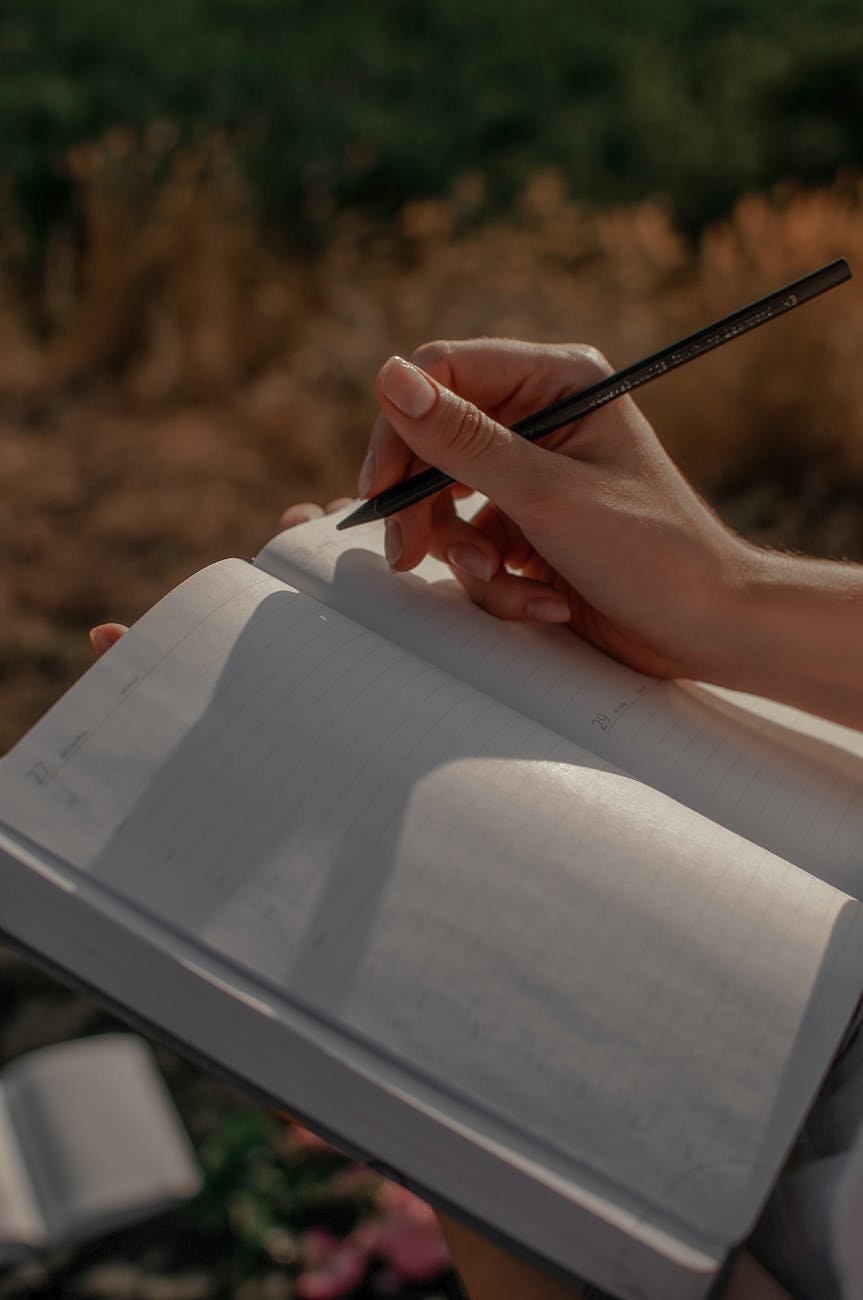
As we begin this journey together, take some time to think and answer these questions – maybe by journaling, or simply leading your mind in that direction, exploring your feelings when you dwell on them:
- Reflect on a time you resisted a new experience or a change. What fears kept you stuck, and what growth did you miss by trying to stay in control?
- Recall a recent setback and how you reacted. How could you have been more “like water” during that situation, accepting the flow instead of fighting it?
- Think about a past challenge you overcame. What small, consistent actions can you take this week to build your inner strength, turning future setbacks into opportunities for growth?
Let’s Start The Flow
This is a space for honest communication, for sharing our individual quests for meaning, and for building a supportive community. I encourage you to leave comments, share your own insights, and let’s learn and evolve together.