
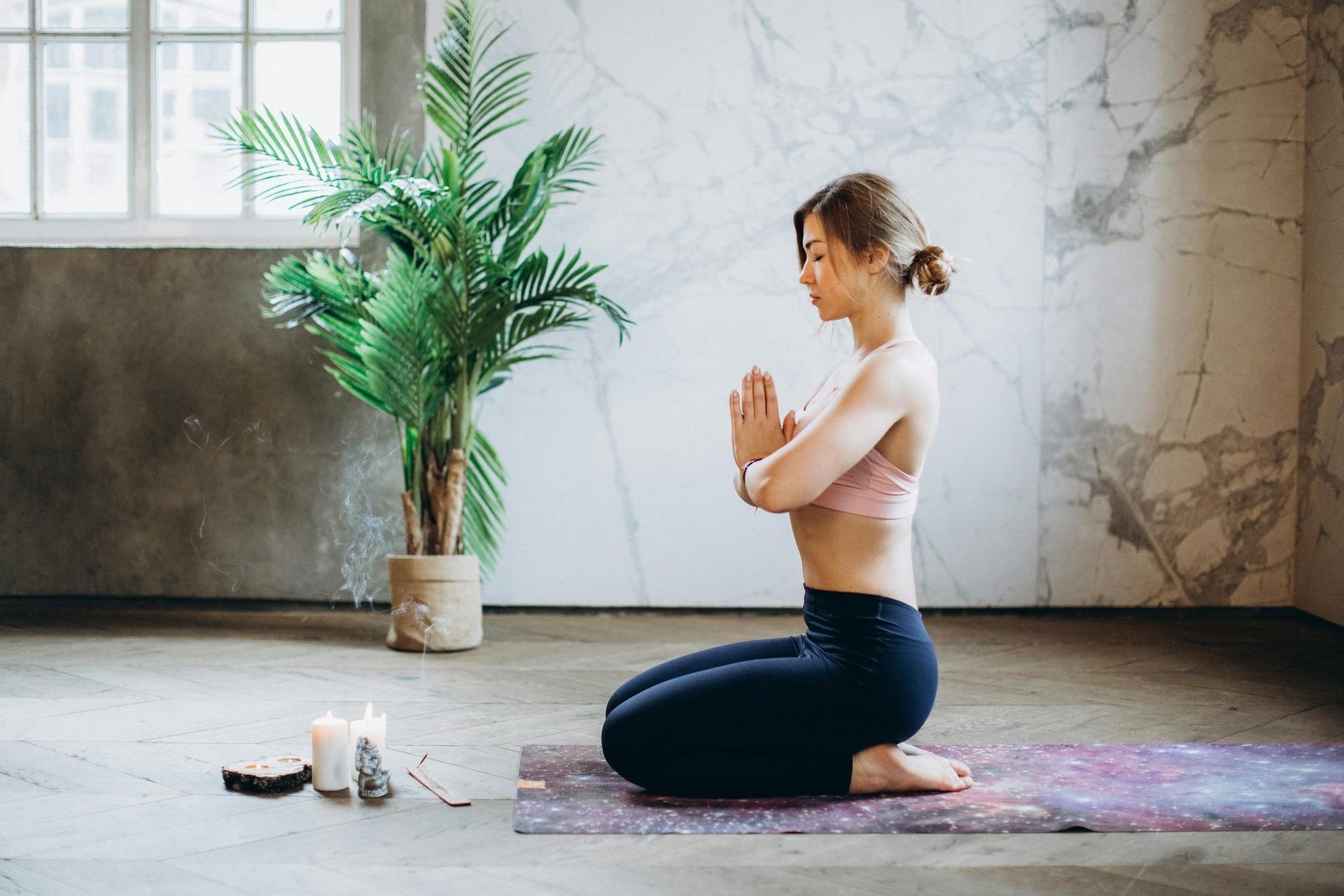
The yoga practice saved my lost and confused soul, while it helped me find my way home to myself. It silently and unconsciously showed me the path back to me. Somehow I followed. No questions asked. Dedicated and present, the energy of the practice and the power of the breath were my driving force. I didn’t know why, but I just wanted to keep going. To return back to the mat day after day. To prioritize my life around it – one retreat after the other. The more consistent I was, the more changes it created. Still unsure about the way it worked, but realizing the major impact on my mind, body, and soul. It helped me find my truest and most authentic expression.
“Yoga is the journey of the self,
Bhagavad Gita
through the self, to the self.”
Without realizing it, it brought me peace of mind, steadiness both in my body and my head, and lightness in my heart. Then, one day I looked behind and it clicked: all the subtle changes in my behavior and feelings were backed by the regular practice. The major change in me had started because I was showing up for myself. I’d chosen to be present and aware of my body’s needs, to tenderly attend to them while challenging the limitations and giving it more freedom of movement. My body became less rigid, more functional, even more vital. Simultaneously, my mind had calmed its whirlwinds; the hundred opened ‘tabs of the browser’ had been muted, some – closed. I had clarity of thought and such a deep introspection I’d never felt before.

A walk back memory lane – how did it all start?
Perhaps, it’s the oldest story in the world: you start doing something new – as a hobby, or just to try it – and somehow it sticks with you. Without realizing it, at some point, it has turned your life 360 degrees. This was yoga for me. A path that I didn’t choose; it chose me. Having tried a bunch of sports with contradictory experiences, a few years back I found myself in a not-so-pleasant state: I had several chronic injuries, a few pain spots here and there, and a lot of stiffness. Yeah, I might have been the one to blame, as I was too disconnected from my body and too stubborn to admit it, but I’d also blame my poor choices.
However, once I realized something needed to change drastically, I was unsure what to try next. I wanted to stay active, but this time NOT at the expense of my body. I’d tried fitness – too boring; CrossFit – too harsh. So I decided to turn to yoga, something absolutely different and so far away from me. First of all, I was NOT a spiritual person, at all. I believed only what I can see and touch. I wasn’t going too deeply into my emotional world, nor was I too bold to experience the world beyond the material. But that’s for a whole different topic.
I didn’t know anything about yoga. I had some friends who practiced it, but I thought they would go in the studio with a bunch of people laying around and stretching a bit during the whole 60-minute “workout.” Oh, how wrong I was. And how did it turn out to be my favorite thing to do years to come! I definitely did not expect that. Not too quickly, I realized it’s not a workout; it’s a work in. Once I did, though, I was in awe. It got me for good.
The physical effort as a medicine for the body
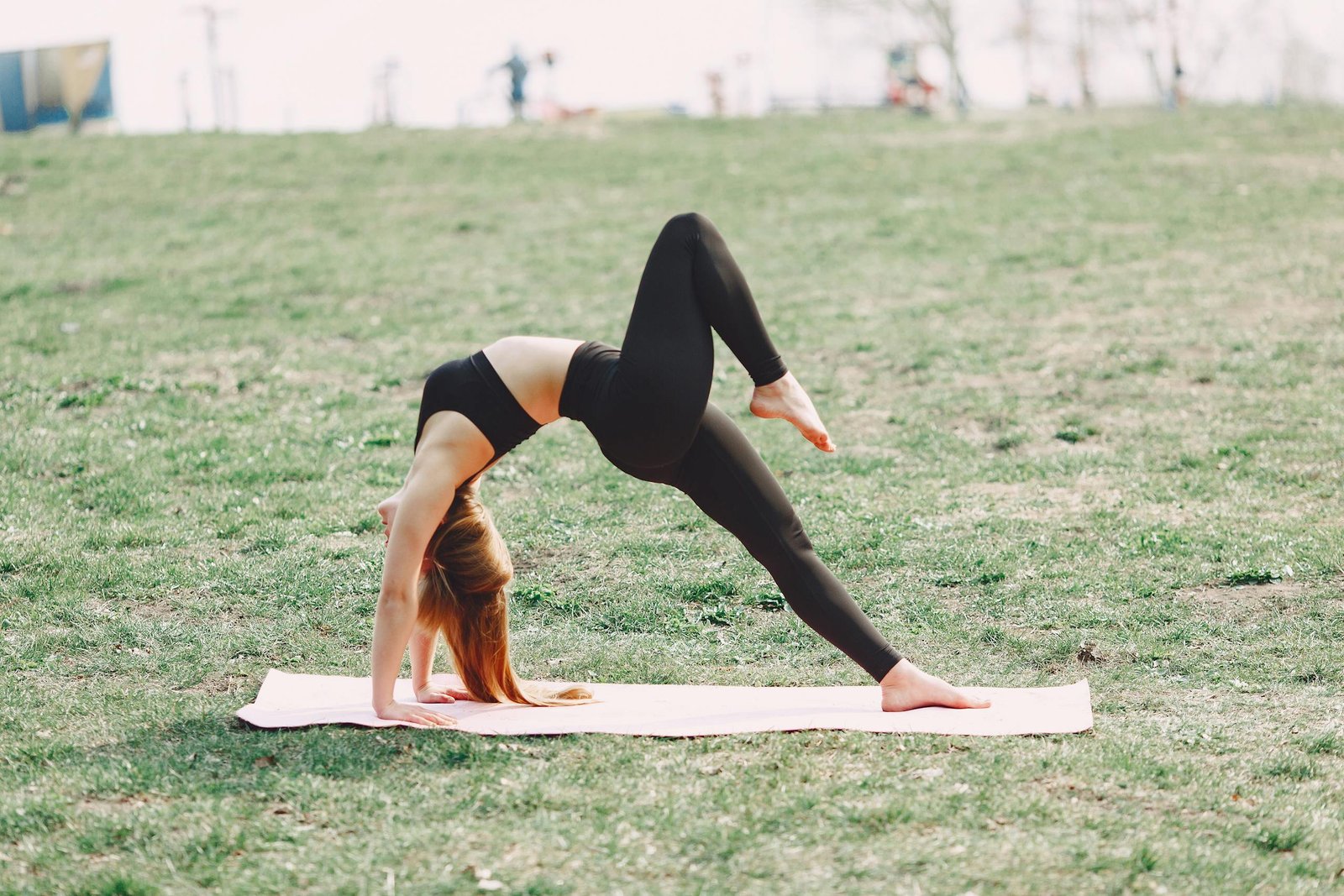
The asana practice (“asana” stands for “seat” or “posture” in Sanskrit) is only one part of the yoga pathway. However, in the times we live in and most especially in the western world, it’s the most common one we know and refer to as “yoga.” When people talk about yoga, they mostly mean the asana, thus the physical practice. The most impressive part is that even this same part alone can make such a big difference.
Firstly, you begin practicing and the body starts to wake up. Yoga introduces you to specific poses and interesting movements or transitions between them (the so-called flow) that simultaneously challenge the body while opening it up. The asanas are so well-constructed that they gently summon the muscle fibers and help the body gain strength while it gains flexibility. Most of the practice is isometrics, which means there’s a lot of perseverance involved. The body gains strength while the mind is challenged to keep still when it becomes the hardest. A huge part of the practice is flexibility, so there’s a lot of mobility involved, as well. The body becomes so functional and is able to move in such complex manners that you start to feel much lighter, less rigid, and so free. It starts to quickly adapt to the changes in your “training routine” and build up this specific endurance and resilience within.
“The body benefits from movement, and the mind benefits from stillness.”
Sakyong Mipham
On the other hand, performing physical activity has always had the power to change one’s emotional state. The energy we put into any “workout” or movement practice helps release any stagnant or suppressed emotions. Moreover, the focused movement in flow – transitioning from one asana into the next one, synchronized with the breathing in and out – works miracles. The mind gets quiet because it’s very focused on what’s going on with the body. These movements are new to the brain, so they require attention. These poses are complex; they require an effort and extra look into the detail. This “flow thing” needs to be simultaneous to the breath – it requires deep concentration. Practicing, we must not get distracted and keep ourselves attentive to all those details we need to synchronize: body, breath, and mind.
Over time, your body gains new abilities: to balance (on one leg, only on your arms, on your head), to stay in poses for five or more breaths, to stay in the discomfort – quietly and present. Because yoga is not an “easy” practice; it’s not just some stretching. It can be sometimes, but it certainly isn’t in the long run. That’s the beauty of it: with a fair amount of challenge and provocation – both for the mind and body, and for your consciousness during movements – you can take so many positives.

The meditation as a medicine for the mind
Looking into the bigger picture, the main reason for the asana practice is to prepare your body for meditation. In order to cure the mind, one must have a body that’s simultaneously stable and sturdy enough. That’s why, first comes physical practice, and then comes meditation (or at least that’s the order in the 8-limbed path of yoga).
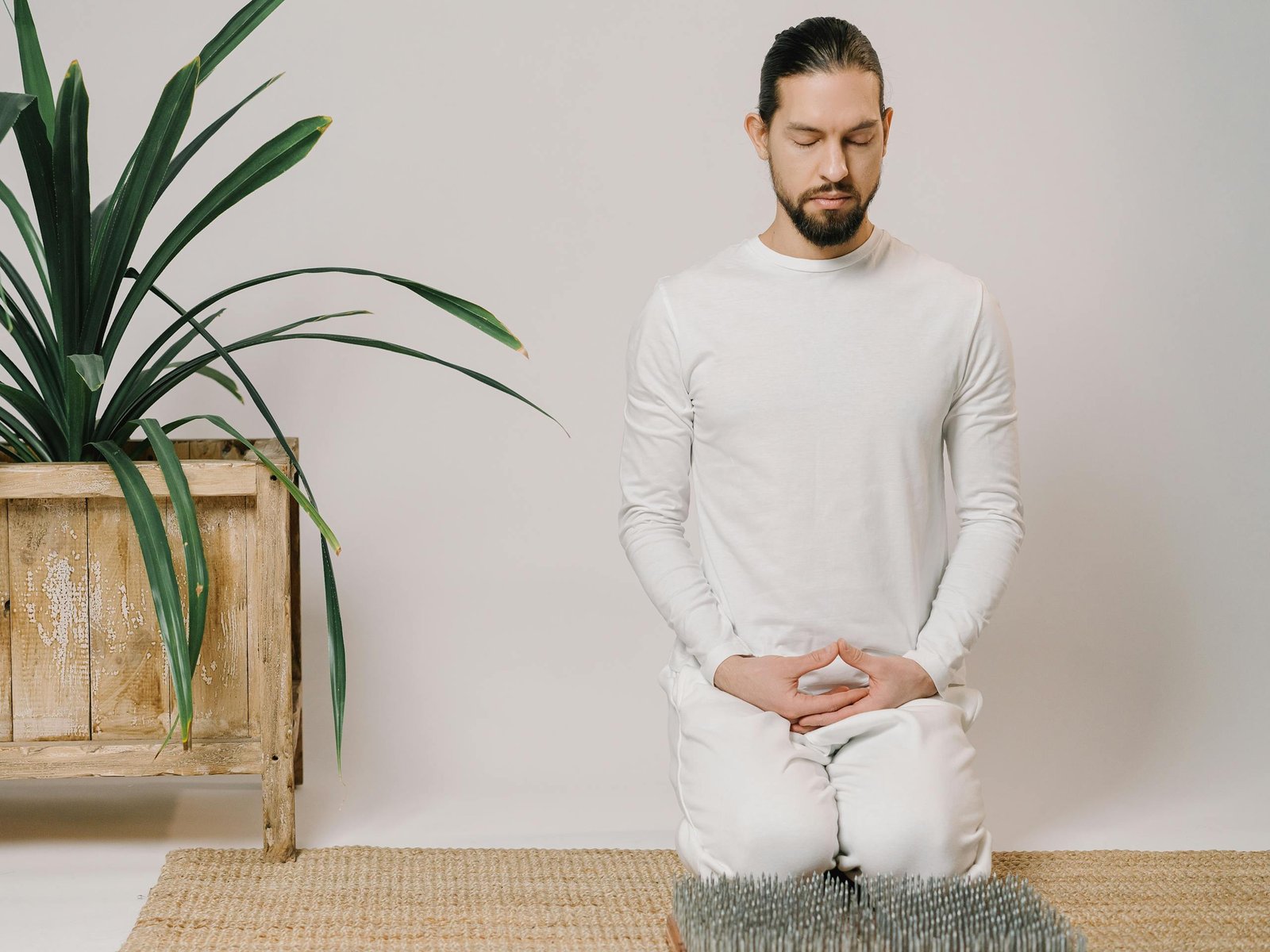
Why does that need to work in order, you may wonder? Well, first your body needs to be able to sit straight, with a lengthened spine, for hours. Yes, you’ve read that correctly – for hours. You don’t need to meditate for hours, of course, but your body has to be ready for it. It has to have the capacity to calmly sit straight for as long as possible so you don’t unconsciously break the meditative state once you’ve entered it.
Meditation requires a body that’s strong and could persevere in one posture for a long time, without experiencing pain, nor feeling of weakness, nor fragility. Sitting for hours without bending allows the mind to stop “taking care” of the body and focus on connecting to the unconscious, then experiencing the bliss state, and then evolving the practice. The reason is every distraction could easily bring you out of that serene focused state of meditation. If your body starts to hurt and you don’t feel comfortable in your position, the mind will quickly follow those emotions and would not be able to stay still.
“You cannot always control what goes on outside.
Wayne Dyer
But you can always control what goes on inside.”
When the body is ready and the mind is clear, meditation is easy. First, you start by focusing on one point – maybe a candle flame if you prefer staying with your eyes open, or if they’re closed – focus on the breath. Breath in, then out. Following the sensation of each breath and its path from the nose deep down until it reaches the diaphragm, then all the out. Noticing its temperature, the feeling of air touching the ligaments. Paying attention to the depth of each exhalation and the calming sensation it brings. Staying focused on each and every detail until your mind is gone.
At some point, being an observer becomes so natural that you even let that go. Nothing to do. Nothing to be. No frames, nor labels. You just sit there in silence, connected with the higher consciousness. Once you’re there, you start to experience all the positives. You feel as if your senses are heightened, while the mind is calm. The depth of the tranquility that arises makes you feel so aligned with yourself. There’s this inner reassurance that everything will be okay, even though nothing has actually changed in the outside world. The inner peace afterwards is indescribable.
The presence as a medicine for the soul
Both the asana and the meditation practice mandate deep presence. If you’re not focused on what’s going on currently in the body and not paying attention to the thoughts, while intentionally controlling the rhythm of the breath, you’re not in a yoga practice, you’re somewhere else – doing gymnastics or stretching.
Ultimately, there’s nothing wrong with that, but if you’ve come to the mat with a more profound reason, with the urge to search for something deeper, with the intention of connecting to your soul, with the promises of a spiritual practice, then presence is required. Even when you find it boring. Especially when there’s discomfort. All those emotions that arise which make us want to “run” are the ones worth staying for. In order to learn, we need to choose to take the unbeaten track, to challenge our comfort, to sustain during all the negative scenarios playing in our mind.
“The present moment is filled with joy and happiness.
Thich Nhat Hanh
If you are attentive, you will see it.”
Slowly and patiently, with each practice, we show up for ourselves and build this sense of presence. The “here and now” becomes more important than overthinking past events or any future worries. Anxiety settles aside because we’re connected to ourselves and to the present moment. We are living now, where most obstacles and disturbances don’t exist. We can finally heal our connection to the deepest source of truth – our soul.
Yoga creates the space to explore the self, to open up, to find the long-lost string connecting the consciousness and the Spirit inside of us. Gradually, we start freeing ourselves from our own limitations and allow this deeper connection within so we can hear our inner voice. We finally realize it’s okay to feel deeply, to experience life and love profoundly, to be just as we are, and remove the veil of the illusion “You’re not good enough.” Meeting yourself allows you to discard the masks you put on that don’t serve you. It breaks the vicious cycle of giving up on yourself, of not trying because you’re afraid.

Courage becomes a quiet companion because you’ve met your shadows, but you’ve also realized your divinity.
The union of mind, body and soul
I started diving deeper into yoga only to find the real, unfiltered, imperfect human being that I am, wandering around in her search of purpose, of love and true connection. I found her. Embraced her. Accepted her with all her messed-up parts, with all the pretty scars, and all the wonderful bits of magic – so I can actually become and truly express her, without fear or shame to be the one with the big caring heart, who has a lot of love to give, happiness and joy to spread, and the wildest, boldest dreams to chase.
Yoga was my comforting place; the community was my family; my teachers were my guardians and an endless source of inspiration. Yoga is a state of mind; it’s not only a physical practice. It’s far beyond that. It’s a philosophy that tenderly takes care of the soul and silences the confused mind. It gently teaches you how to open your heart to the world and the people without the fear of getting hurt or feeling “too much.” It’s the many things that happen in the silence: looking inside the inner world, connecting, embracing, loving, surrendering fully, breaking apart…to break open. Only to rebuild yourself stronger, more confident, and truly authentic.
A Gift to Yourself: Journal Prompts
The Body’s Truth
- In this moment, where does your body feel the most rigid, tight, or resistant?
- What might that physical sensation be trying to tell you about your current emotional or mental state?
The Work In
- What is the one major difference you notice between your inner self and the person you present to the outside world?
- How can you use “presence” today to close that gap and choose authenticity?
The Unbeaten Path
- What is one area of your life right now (relationship, work, habit) where your instinct is to “run,” and what if you chose to stay and be present instead?
The Guiding Light
- If you could hear your inner voice clearly for just one minute, what one piece of advice would it give you about your purpose, love, or dreams?